
Reckitt finds that planting trees to offset carbon can lose you friends
14 May 2015
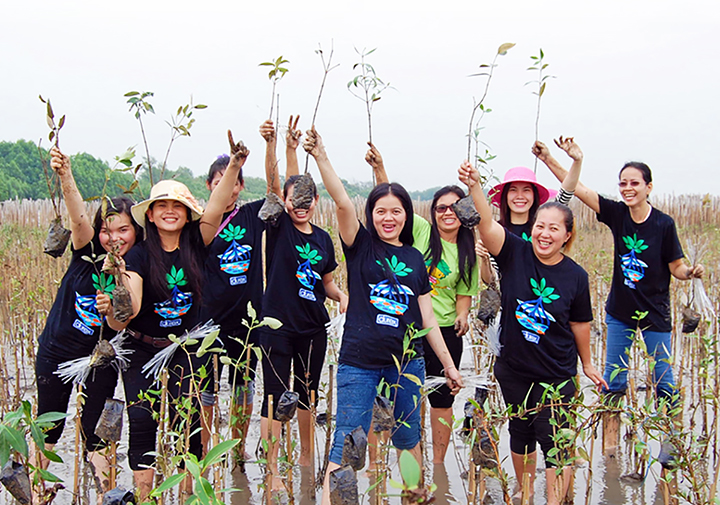
You would think that planting trees was the most universally smiled-upon activity a company could undertake. Even if there are people out there who think that carbon-offsetting is a distraction from reducing emissions, nobody actually minds if you plant trees. Do they?
As Reckitt Benckiser are finding - yes, they really do. Specifically the citizens and governance of British Columbia, Canada mind quite a lot that the company has been planting thousands of hectares of farmland with trees in order to gain carbon credits. The planting comes with a covenant to say that the trees can't be logged for a hundred years.
The issue is that this is an agricultural community, and what they see is good agricultural land being snatched beyond use - and by a foreign company to boot. The local authorities have written to the company to protest, arguing that the degree of planting could have "a negative impact on the region's economy, as centrally located and productive agricultural land is taken out of production in the long term." Indeed, they said, the practice was "not sustainable," which is, after all, the point.
In the early days nobody minded. The land the company was planting was marginal land that didn't have so much agricultural value.
As companies start pushing obviously good initiatives to scale, unintended consequences will begin to emerge
The company said that its practice is to target such marginal land, such as rough paster, pasture, hay land and abandoned farms. What's more, it said that its presence in British Columbia contributed a significant amount to the local economy from the goods and services it bought in the area.
Warren Wilson, a rancher in the Prince George area, told the Globe and Mail that he's seen good cattle ranches become carbon offset forests. "It breaks my heart and it doesn't make any sense at all."
This is one of those tricky dilemmas. At the moment on the RB website, the page on 'RB Trees' proudly proclaims "we've planted over 7 million trees to date." Probably nobody until now saw that headline as anything remotely edgy or controversial.
But we will see more of this. As companies committed to reducing their environmental impact start pushing obviously good initiatives to scale, unintended consequences will begin to emerge. And land use is going to be one of the recurrent flashpoints.
After all, we are still filling the world up with human beings that need feeding. And at the same time, significant amounts of land are being turned over to crops for biofuels. Add to that programmes to take land out of production to cultivate carbon offset trees, and we can see a very nice battle developing over one of the most finite resources we have.
Planting trees remains a good thing to do. Trees are the lungs of the planet, and globally we have removed far too many. But as economic and developmental pressures grow, the debate will become quite fierce over what is the correct use of land, and just how much something distant and invisible - like carbon offsetting - will be able to compete with something immediate and local - growing food.
Companies like Reckitt Benckiser will need to add another level of sophistication to their programmes to deal with these tougher questions in the future.
Subscribe to Updates
Enter your email address to subscribe to this blog and receive notifications of new posts by email.
We will never share your details with any third party
