
The rights and wrongs of GMO labelling
25 February 2016
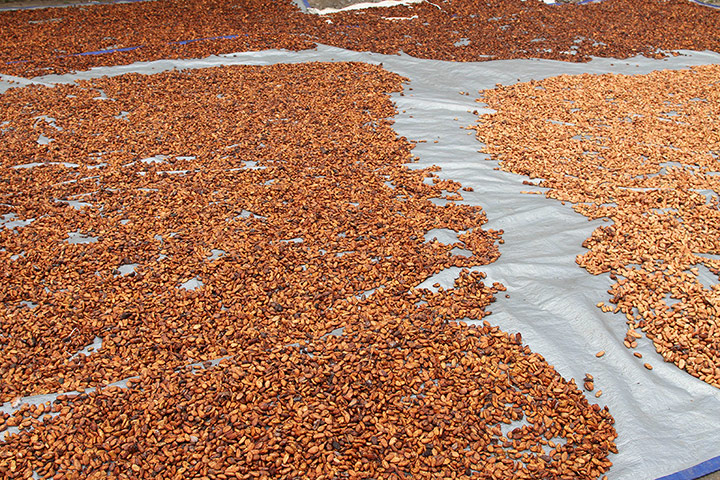
How would you feel if you looked at a jar of dried spice in the supermarket, studied the label to see the ingredients, and saw listed “irradiated rats’ droppings?”
I’m going to take a wild guess and suggest that you might just leave that jar on the shelf.
If this is a hypothetical scenario, it’s only in relation to the existence of the label. A certain percentage of spices will contain exactly what is described above, along with insect parts and other things that would not be considered to be a beneficial feature by the brand marketers.
Why is it allowed? Because in principle it’s harmless. The process of irradiation makes all matter that might be present benign. It’s just a tiny quantity of non-spice residue that doesn’t affect flavour or health. So practically speaking, nobody needs to worry.
Campbell’s actions on GMO labels have shown that there is little to fear, and everything to gain
But if it was on the label, you can be 100% sure there would be a huge backlash, swiftly followed by plummeting sales.
It’s the same principle that is currently applied to labelling GMO ingredients in the US. A whole bunch of legislators, scientists and food companies are firmly convinced that GMOs are perfectly safe.
In that case, why not label ingredients clearly so that people can make their own choice? Because although they know it’s harmless, the public doesn’t necessarily one hundred percent agree with them. From instinct and sentiment alone, some would react negatively to the presence of GMO food and, since it’s quite widespread these days (as in 90 percent of canola, soy, corn and sugar beet), that could be a bit of a problem for producers as a whole.
And you know what? They may well be right as far as the science goes. The majority of GMOs, heck, maybe even all of them, might be perfectly safe. Nobody has proven otherwise.
But the truth is that sometimes you can get the science right, and lose the argument anyway. Society as a whole decides in its dynamic and clumsy way what it will deem to be acceptable, just like it decides independently of the received wisdom of pundits who it’s going to vote for. So the establishment fears labelling because of the revolution it might unleash.
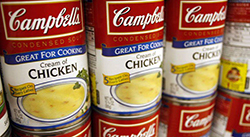
Campbell marched straight into this debate, of course, when it announced it would be labelling its own products to indicate the presence of GM ingredients. The company has been emphasising transparency in recent years, launching a whatsinmyfood.com website.
It was a controversial move. When the opponents of GMO labelling had been arguing that any move to require it would increase costs for American consumers, the action of a company like Campbell to voluntarily introduce the measure without raising prices was an unwelcome one.
Of course, the label on the affected soup tins is very generic and vanilla. The product has been produced with certain products of genetic engineering, and more details can be found on the website. It’s not expected to impact on the sales of Campbell’s soup in relation to the other brands.
At least, not as things stand right now. But I’m guessing that those wary of labels can envisage a scenario where we see a run of scare stories. Something – one particular GMO – suddenly gets a question mark over it that breaks into mainstream consciousness. All of a sudden, people are adding two and two and making five all over the place. It could easily happen.
But do you know what? In situations like that, the companies that have shown proactive transparency are always best placed to take remedial actions with the support and trust of their customers. Really, Campbell’s actions have shown that there is little to fear, and everything to gain by being open before anyone is requiring it of them.
In the EU, of course, we have had mandatory GMO labelling for years. The penetration of GM ingredients is considerably less, but equally once in place it has generally been a rather quiet affair. Few people actually bother to look at the labels, that’s the truth of it.
But like any issue about which people feel strongly, the minimum level starting point is that people should have access to enough information to take their own decisions about what they do and don’t buy.
Even if that started a chain reaction of events that came to the conclusion, inconvenient for some as it may be, that the world has to find ways of producing spices that are free of rat droppings.
Even if those rat droppings are safe to eat. Yum.
Subscribe to Updates
Enter your email address to subscribe to this blog and receive notifications of new posts by email.
We will never share your details with any third party
