
The difference between best practice and standard practice
I saw an article today - just one in a long line - making reference to best practice in CSR reporting. I'm not going to single it out - it wasn't worse or different to others of the genre.

I saw an article today - just one in a long line - making reference to best practice in CSR reporting. I'm not going to single it out - it wasn't worse or different to others of the genre.

Lots of business leaders have signed up for a more sustainable business future. He was the only one who started off by describing himself as "a plunderer."

The Wall Street Journal recently carried a piece by Aneel Karnani, associate professor of strategy at the University of Michigan's Stephen M Ross School of Business.

Today saw the launch of a document I've written for the Institute of Business Ethics on 'Marketing Responsibly'. It generated an interesting discussion, and I thought I would share some of the key points here.

The new CEO of GlaxoSmithKline Andrew Witty has startled commentators, campaigners, and probably a few shareholders, with his announcement that the company would slash the cost of many of its drugs to people that need them in developing countries.
It shouldn't be a great surprise that the financial crisis should prompt a bunch of the standard anti-CSR arguments to be rolled out with renewed vigour and determination.

One of the classic tales of how a company can get crisis management right is that of Johnson & Johnson, and the company's response to the Tylenol poisoning.

The UK's Independent newspaper has been carrying a front page campaign against the restaurant chains – and independent restaurants too, of course – who have a policy of snatching the money given towards a service charge to pay for the minimum wage salaries of their serving staff.

According to a new survey of employees, most are enthusiastic about the principles of corporate social responsibility, and they are keen to work for a company that shares their values. But they are finding barriers at work to finding ways to express this enthusiasm.

For some people, corporate social responsibility is about programmes. Stuff that you do where you can describe what you're trying to achieve, what approach you've taken to achieve it, and whether it worked.
If the arguments for a socially responsible approach were widely accepted, nobody would even using the label "CSR" because everyone would be doing it.
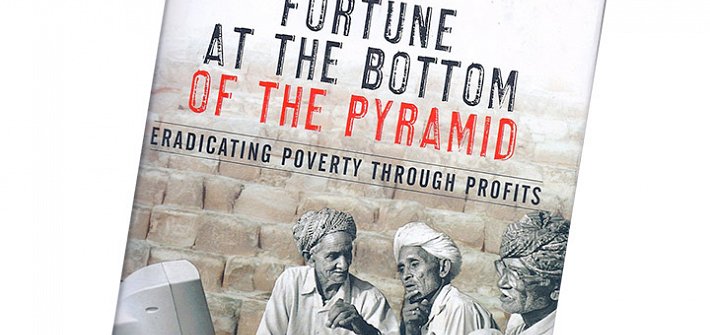
The seminal work by CK Prahalad, arguing the crucial role of multi-national corporations in alleviating poverty by treating the poor as consumers, has been one of the most influential tracts in recent years. Now, a vigorous attack has been mounted on its underlying assumptions and conclusions.

Killing people is wrong. That's one of the earliest principles established by any civilised society. So how can a company be considered socially responsible if its products - used as instructed - result in loss of human life?
One of the most frequently asked questions at this site - and probably for all those individuals and organisations dealing with CSR issues is the obvious - just what does 'Corporate Social Responsibility' mean anyway?

The Hutton Report has placed the harshest possible spotlight on the social responsibility of media companies - a light that in the first instance has not been greatly flattering to the BBC. But what here is the real challenge of corporate social responsibility for media companies?

One of the last bastions of resistance to CSR programmes within corporates often seems to be the HR department. Given the significant range of issues owned here, that can be a real disadvantage.
Enter your email address to subscribe to this blog and receive notifications of new posts by email.
We will never share your details with any third party
